Our Research
Maternal–Infant Microbiome Transmission

We study global birth cohorts with longitudinal follow-up to understand how beneficial microbial communities are passed across generations. Our work explores how maternal sources, including microbial reservoirs and physiology, shape early colonization in infants. We also investigate how environmental exposures, such as diet, geography, and lifestyle, influence these developing ecosystems. Together, these efforts reveal the processes driving the early assembly of the infant microbiome, particularly in the nasal and gut.
Environmental Impacts on the Microbiome

We investigate how environmental changes, ranging from climate-driven extreme weather events to immune and inflammatory processes, reshape the human microbiome. Through our Hurricane as the Origin of Later Alterations in Microbiome (HOLA) study in Puerto Rico, we examine the impact of prenatal exposure to Hurricane Maria on infant microbiome development. This work further explores how such early-life disruptions may increase the risk of asthma and other chronic diseases.
Microbiome and Respiratory Disease
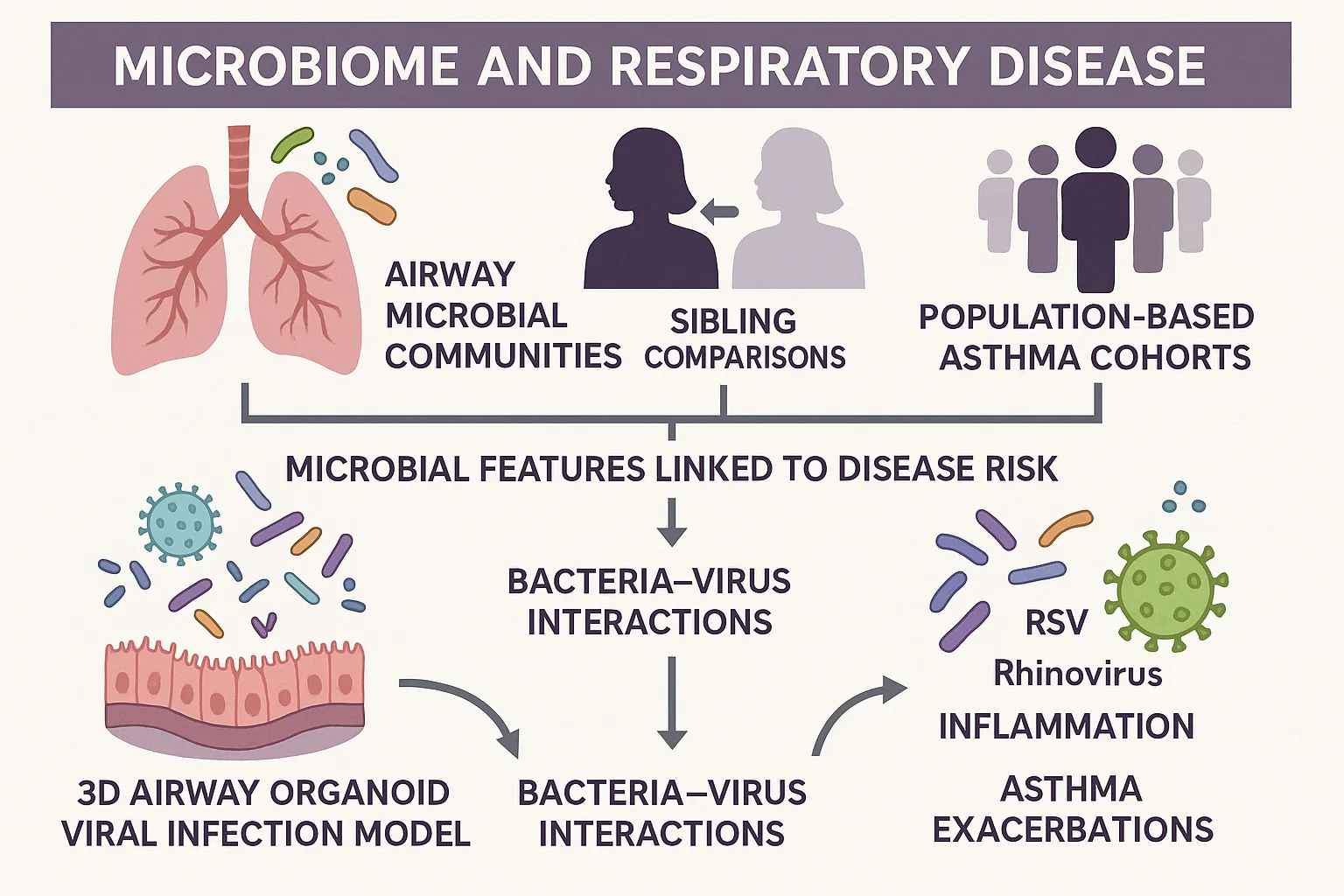
We investigate how airway microbial communities contribute to asthma and other lung diseases. Using innovative study designs, such as sibling comparisons and population-based asthma cohorts, we identify microbial features linked to disease risk. To probe mechanisms, we developed a 3D airway organoid viral infection model, enabling us to examine bacteria–virus interactions—particularly with RSV and rhinovirus—that drive inflammation and asthma exacerbations.
Research Archivements
Please refer to Dr. Wang lab's previous research page for a complete list of our research archivements on Washington University in St. Louis.